
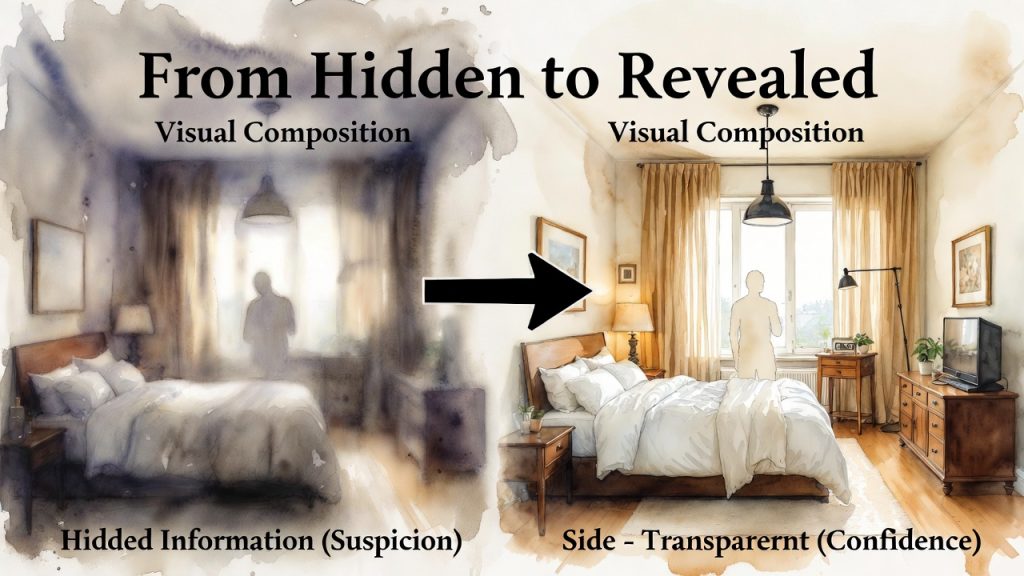
A bedroom is smaller than the buyer expected. A view is less impressive than the rendering suggested. A layout is tighter than the floor plan implies.
So you hide the information. You don’t show the actual bedroom dimensions. You don’t show the real view. You don’t explain the layout constraints.
You think you’re protecting the sale. You’re actually killing it. Because the buyer will eventually see the reality anyway. And when they do, they’ll know you were hiding something.
The Fear-Based Approach (And Why It Fails)
Most developers operate from fear. Fear that too much information will scare buyers away. Fear that showing the actual bedroom size will reveal it’s too small. Fear that showing the real view will disappoint. Fear that transparency will hurt sales.
So they minimize information. They show renderings of empty rooms (no bedroom dimensions visible). They show aspirational views (not the actual views from specific units). They provide floor plans but avoid discussing constraints. They hope buyers will fall in love with the dream before asking questions about reality.
This strategy works short-term. It generates excitement. It gets buyers emotionally invested.
Then the buyer visits the building. They see the actual view. They measure the actual bedroom. They understand the actual constraints. They realize what you weren’t showing them.
At this moment, trust collapses. The buyer doesn’t think “I got a good deal.” They think “The developer was hiding something.” And hesitation—the death of deals—takes over.
The fear-based approach doesn’t protect sales. It delays them, complicates them, and often kills them.
How Buyers Actually Think
Modern presale buyers don’t shop like they used to. They don’t accept a beautiful rendering and a promise. They investigate.
They collect information from multiple sources: renderings, floor plans, street views, comparable projects, past reviews. They connect the dots. They try to understand what they’re actually buying, not what the developer is selling them.
This investigative behavior means one thing: hiding information doesn’t work. The buyer will find the information eventually. The only question is whether they find it from you, in a transparent context, or from another source, in a suspicious context.
If you show the actual bedroom size, actual view, actual layout—the buyer can contextualize that information. “The bedroom is smaller, but I like the view. The layout is tight, but the location makes up for it.” The buyer finds their own reason to buy, on their own terms.
If you hide the information and the buyer discovers it later, the buyer’s first reaction is betrayal. “Why didn’t they show me this?” Trust is broken. The deal is at risk.
The Transparency Advantage
Transparency does three things:
First, it builds trust. When you show everything—the real view, the actual dimensions, the honest layout—the buyer knows you’re confident in what you’re selling. Confidence is contagious. The buyer becomes more confident too.
Second, it addresses fears early. Every buyer has doubts. “Is this bedroom big enough? Will I like the view? Can I make this layout work?” Transparency answers these questions immediately, rather than letting fear build over weeks of uncertainty.
Third, it finds the right buyers. When you’re transparent about what you have, you attract buyers who want what you’re actually selling—not buyers who fell in love with a fantasy. Those right-fit buyers close faster and stay satisfied longer.
Meanwhile, less transparent competitors are still trying to manage the gap between their dream-based marketing and their reality-based product. They’re fighting buyer expectations instead of fulfilling them. They’re slower, more complicated, and less profitable.
Transparency is not just honest. It’s a competitive weapon.
What Transparency Looks Like
Show actual views. Don’t show aspirational renderings of perfect light. Show the real view from the specific unit at different times of day. Show what the buyer will actually see when they look out their window.
Provide actual dimensions. Don’t say “spacious master bedroom.” Say “12’6″ × 14’2″—here’s how that compares to standard furniture.” Let buyers calculate whether their bed fits, where their dresser goes, what the walking space is.
Explain constraints honestly. If the unit is in a tight layout, say so. If the view is limited, explain why (and what you get instead—maybe it’s quiet, or it gets great light, or it’s on a high floor). Frame constraints in context, not as secrets.
Show real-world context. Don’t show empty, pristine spaces. Show how the unit actually works when it’s lived in. Show furniture placement options. Show the circulation patterns. Show what everyday life actually looks like.
Address questions before they’re asked. Know what buyers will worry about. Address those worries directly. “We know the bedroom is compact. Here’s why: the living room is expansive, which is where you’ll spend most of your time. And look at this view.” Don’t wait for the buyer to discover and resent the information.
The Transparency-Trust Loop
Transparency creates trust. Trust enables buyers to self-select (this is right for me, or it’s not). Right-fit buyers close faster and feel confident about their decision.
This loop compounds. Right-fit buyers become advocates. They refer other right-fit buyers. Your word-of-mouth is stronger because your buyers are genuinely satisfied, not discovering hidden truths after closing.
Meanwhile, less transparent competitors are still managing buyer disappointment, renegotiating terms, and dealing with post-sale complaints. They’re paying the price for short-term thinking.
Transparency is not just honest. It’s smarter business.
The buyer will see the reality eventually.
Better they see it from you, in context.
Transparency for Investors
If you’re evaluating a presale project, transparency is a due diligence signal.
Can the developer show you actual views? Can they give you actual dimensions? Can they explain constraints honestly? If yes, that’s a sign of confidence and market understanding. If no, that’s a red flag.
Transparent developers attract right-fit buyers, absorb presale inventory faster, and maintain momentum through closing. Less transparent developers struggle with buyer hesitation, deal friction, and slow velocity.
Transparency accelerates presale velocity. Ask to see it before you commit.

Mario Comando
Most developers hide information because they’re afraid transparency will hurt sales. Exactly backwards. The buyer will see the reality eventually—the question is whether they see it from you, in context, or from another source, in suspicion. Be transparent from day one. Address fears early. Find buyers who want what you’re actually selling. You’ll close faster, with more confident buyers, and less deal friction. That’s not just ethics. That’s better business.
File No. PS–18 · Transparency as Competitive Advantage · Developer framework for understanding how transparency builds trust, addresses buyer fears early, finds right-fit buyers, and accelerates presale closing velocity.
Want to show actual information? See how transparency builds buyer confidence