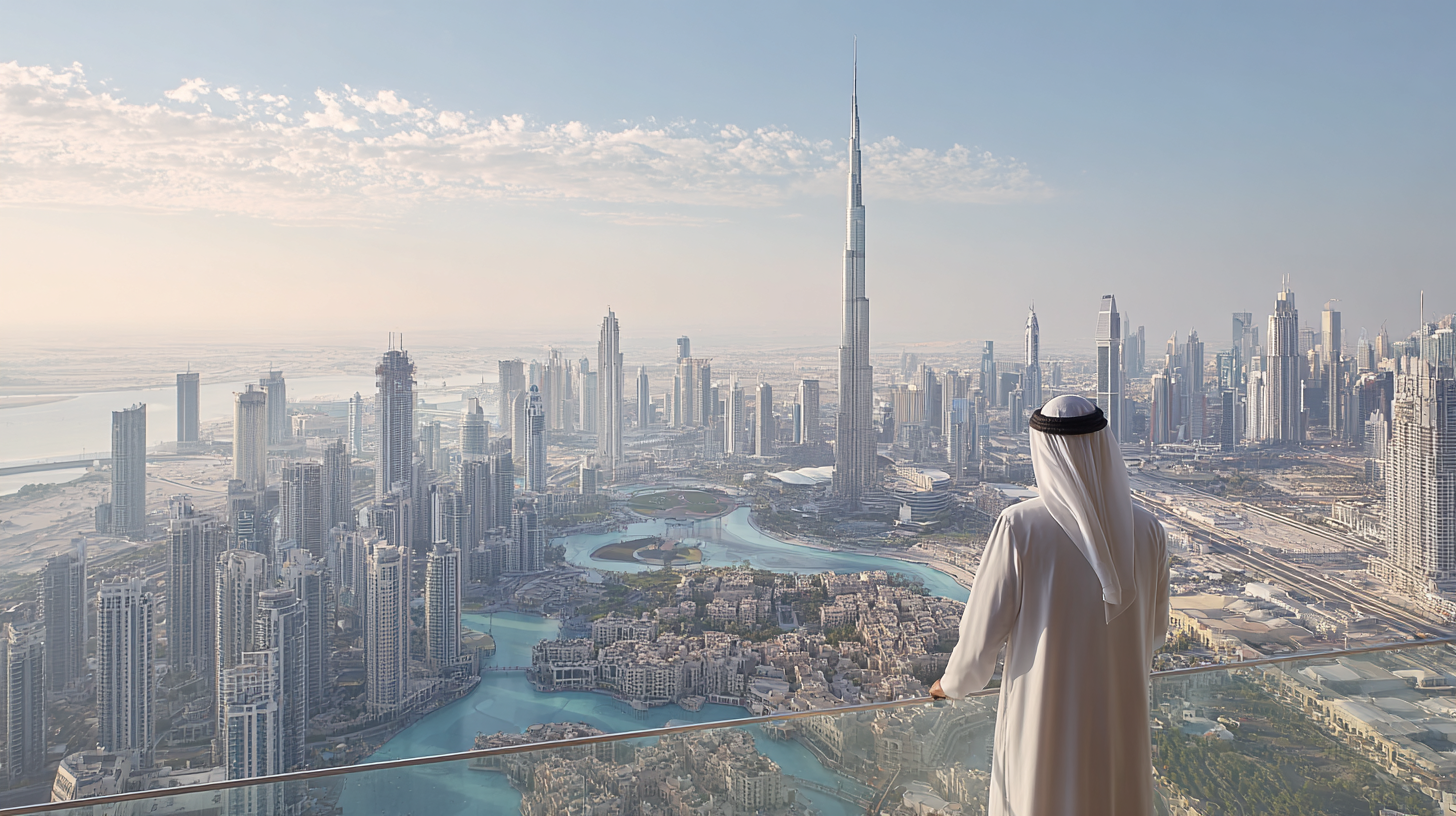
Mohammed Alabbar, the founder and chairman of Emaar Properties, stands as a pivotal figure in the transformation of Dubai into a global real estate powerhouse. Under his leadership, Emaar has developed iconic landmarks like the Burj Khalifa and Dubai Mall, shaping the emirate’s skyline and economy. In a 2024 interview, Alabbar shared his candid insights on Dubai’s property market, expressing caution about “fantasy prices” while affirming its overall health and stability. He emphasized rational growth, warned against rapid spikes, and highlighted Emaar’s focus on sustainable development amid global shifts. As we reflect on 2025—a year marked by record-breaking sales and evolving buyer trends—Alabbar’s strategy not only aligns with but anticipates market realities. This essay explores how his approach, rooted in prudence, global reach, and cutting-edge innovation, continues to drive Emaar’s success in Dubai and internationally.
Dubai’s Market Health: Stability Amid Soaring Demand
Alabbar’s 2024 assessment painted Dubai’s real estate as a “stable, solid market” without a looming bubble, driven by post-COVID influxes of wealthy individuals seeking lifestyle upgrades. He noted 2023’s 28% volume growth and 15% price increase, alongside 30% sales expansion from 2022 to 2023, attributing this to factors like advanced medical services and relocations from Indian business leaders and European tycoons. Critically, he advocated for gradual, inflation-linked growth, expressing discomfort with “fast price growth” that often signals underlying issues.
Fast-forward to 2025, and the data largely validates his optimism while underscoring his call for rationality. Dubai’s property market achieved historic highs, with sales reaching AED 525.87 billion in the first 290 days alone, surpassing previous benchmarks and reflecting sustained demand. Overall, the UAE real estate sector is projected to hit US$693.53 billion by year-end, with residential properties comprising US$401.81 billion. Residential prices in Q1 2025 rose 3.7% to AED 1,749 per square foot, with villas climbing 3.9% to AED 2,088 per square foot, supported by 43,000 transactions totaling AED 114.7 billion. By Q2, the market hit new records, fueled by Dubai’s global appeal with AED 184.3 billion in sales.
However, echoes of Alabbar’s warnings appear in reports of double-digit price surges since mid-2023, with real prices now 50% higher than five years ago—the strongest growth among major cities, per UBS. Villa prices have exceeded AED 5.2 million on average, indicating a shift toward suburban and luxury segments. On supply, Alabbar anticipated 40,000 units delivered in 2024-2025, dismissing oversupply fears if projects remain rational. In reality, projections show around 182,000 units entering the market in 2025-2026, yet demand outpaces this—especially from international buyers purchasing remotely, a trend Alabbar implicitly acknowledged when noting how global wealth “took notice” and relocated without hesitation.
Evolving Buyer Dynamics: Global Shifts and the Rise of Remote Investment
A key pillar of Alabbar’s strategy is understanding buyer motivations and adapting to them. In 2024, he highlighted Russians cashing out with 60% margins, Chinese holding 12–15% market share, and Europeans—especially Brits—surging due to tax flight, making up 4–5% of monthly sales. He observed a behavioral shift: “Some people are strange—they came to live here, tried it, and didn’t leave.” But beyond physical relocation, most investors today are buying Dubai properties from abroad, never stepping foot on-site before signing.
This remote-first investment wave defines 2025:
- 22% of buyers are Indian, many headquartered in Mumbai or London.
- 11–17% are UK nationals, leveraging Golden Visas and tax arbitrage.
- Over 30,000 investors from 155 countries contributed AED 81 billion in the first nine months—the vast majority transacting digitally.
This global, borderless demand requires more than brochures or fly-and-buy trips. It demands trust at a distance—and that’s where SuiteFlow becomes the perfect tool for Dubai developers.
SuiteFlow is not just a virtual tour platform—it’s a data-built, unit-specific digital twin that lets investors explore every unbuilt or occupied unit with exact layouts, true views, and permanent records, all generated from architectural plans. No staging. No access needed. Scalable across hundreds of units, from studios to penthouses.
For a cutting-edge market like Dubai, built on vision and velocity, SuiteFlow is the cutting-edge product for a cutting-edge mindset. It doesn’t just show the property—it proves it. Buyers in London, Singapore, or New York can:
- Walk through their exact floorplan at golden hour
- Compare views from the 12th vs. 42nd floor
- Share a transferable, immutable digital record with advisors
- Make informed decisions before the foundation is poured
This aligns perfectly with Alabbar’s rational, margin-focused philosophy: reduce speculation, increase conviction. In a market where “fantasy prices” raise eyebrows, SuiteFlow delivers transparency at scale, turning global curiosity into closed deals—faster, safer, and more profitably.
Diversification and Global Focus: The Eastern Europe SuiteFlow – Powered by Digital Reach
While Dubai remains core, Alabbar’s strategy extends globally for better margins and risk mitigation. He spotlighted Eastern Europe—Albania, Croatia, Serbia, Hungary, Latvia, Belarus, and Georgia—as high-yield frontiers, executed via Eagle Hills, his Abu Dhabi-based master-developer. This isn’t scattered expansion; it’s a SuiteFlow of interconnected ecosystems, where waterfront cities, hospitality hubs, and green districts flow investment, lifestyle, and returns across borders.
In 2025, the numbers speak:
- AED 46 billion (US$12.5 billion) in H1 global property sales, up 46%
- Eastern Europe SuiteFlow includes:
- Albania: Durrës Yachts & Marina
- Croatia: Sunčani Hvar (EUR 250M) + Zagreb City within the City (EUR 1B+)
- Serbia: Belgrade Waterfront – USD 13B expansion, driving 20% of Belgrade’s GDP growth
- Latvia: Riga Waterfront (EUR 3B), adding EUR 120M annual impact
- Georgia: Two Tbilisi masterplans (USD 6.5B), injecting USD 7B into GDP over a decade
Just as SuiteFlow empowers Dubai’s remote buyers, it becomes the digital bridge for these emerging markets. A London-based investor exploring Emaar Beachfront can, in the same session, tour a Riga penthouse or a Belgrade riverfront residence—all with unit-level precision. This cross-project, cross-border SuiteFlow doesn’t just sell properties—it builds portfolios of lifestyle, reinforcing Alabbar’s vision of rational, high-margin, globally connected real estate.
Conclusion: A Blueprint for Enduring Success in a Borderless World
Mohammed Alabbar’s strategy—rational pricing, global diversification, and digital-first reach—has proven prescient in 2025. Dubai’s boom is no longer fueled by fly-in buyers but by informed, remote investors trusting what they can see, measure, and verify—from anywhere.
SuiteFlow is the tool that makes this possible:
- For developers: Scale pre-sales, reduce risk, accelerate velocity
- For investors: Eliminate doubt, enable comparison, secure conviction
- For Dubai: Cement its position as the world’s most trusted off-plan market
As Alabbar expands into Eastern Europe, Saudi Arabia 4,000-unit pipeline, and Egypt US$18.5B Red Sea project, the SuiteFlow model—both strategic and technological—ensures every vision is not just built, but believed.
In an era of global capital and digital trust, Alabbar + SuiteFlow = the future of real estate.
Stay rational. Build globally. Sell digitally.
#DubaiRealEstate #Emaar #SuiteFlow #PropTech #GlobalInvestment