Before Gutenberg, the world’s knowledge existed in fragments. Monks copied manuscripts by hand, one at a time, each book a rare object that could vanish in a fire or rot in a monastery. Information moved no faster than a human could write. Ideas were local, fragile, and controlled.
Then came the printing press. Suddenly, words could multiply. Thought could travel farther than the thinker. Authority began to crack, because ownership of truth was no longer confined to the few who had access to parchment and ink. When knowledge became scalable, it became free.
Real estate today lives in that same pre-Gutenberg silence. Each building exists as a single copy, a physical manuscript in stone and steel. To understand it, you must go there, walk through it, or rely on an interpreter—a broker, a salesperson, a glossy rendering—to tell you what it means. Access is gated, comprehension is partial, and replication is nearly impossible.
But a strange thing happens when you digitize space. When you translate architecture into data—every unit, every floor, every view—you stop representing buildings and start publishing them.
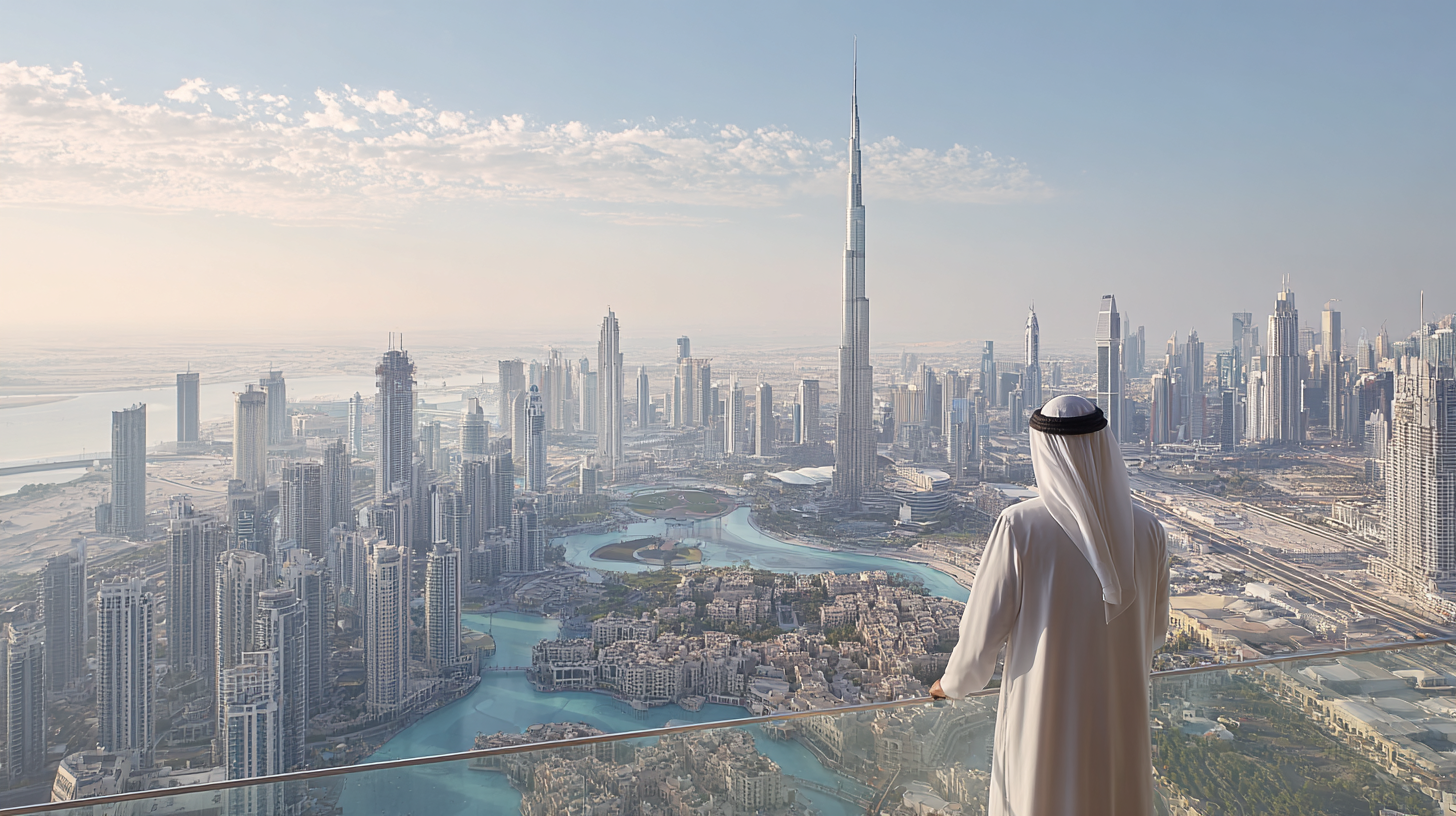
A developer no longer has one physical project that people can visit. They have a thousand digital copies people can explore. A building ceases to be a place you reach by plane or car; it becomes an experience you can send in a link.
That’s not a minor upgrade in marketing. It’s a change in ontology.
We’ve spent centuries treating architecture as matter—stone, glass, steel. But the moment a building can be fully captured, simulated, and distributed, it becomes media. It obeys the logic of distribution, not construction. The difference between a model and a manuscript is that one can be shared infinitely.
Once upon a time, the Catholic Church dictated what people could read and know. Today, brokers and intermediaries act as similar gatekeepers—filtering information, shaping perception, managing scarcity. They aren’t evil; they’re relics of a time when the only way to sell was through personal presence and persuasion.
But history has a rhythm. When reproduction becomes easy, gatekeepers lose their power. When the buyer can see everything—the floorplan, the light at 4 p.m., the view from the balcony—there’s little left to “explain.” Trust no longer comes from authority; it comes from transparency.
We’ve always admired the early digital pioneers who saw this coming.
Matterport’s mission to digitize the world was one of the first real glimpses of this future. And Google—by capturing our planet, street by street—gave humanity one of its most powerful gifts: the ability to see the world, not just imagine it.
Many of us have lost hours wandering through Google Street View—drifting across cities we’ve never visited, or revisiting neighborhoods we once called home, tracing time itself through pixels. Then, once in a while, you stumble upon a street from your childhood and wish this technology had existed back then—to see those magic places again: the road where your friends rode their bikes, the corner shop that’s long gone. Honestly, if a product like that existed for the 70s & 80s, I’d happily pay a hundred dollars a month just to relive it.
Because when the past remains physical, time erases it. But when we digitize it—faithfully, beautifully—we make time reversible. We don’t just record history; we build a kind of time machine.
That nostalgia is a clue. It shows what digital preservation can mean when it’s done at the human scale.
Part of Suitesflow mission is to digitize what others can’t: the interior world, the granular details, the units themselves. Not just façades, not just streets—but how it feels inside. Each space becomes a permanent digital copy of a building, transferable with the property, shareable across the globe in seconds.
In a way, we’re continuing the same trajectory that began with the printing press: from manuscripts, to printed pages, to faxes, to data packets flying through fiber and satellites.
Every step made information lighter, faster, more alive.
We think about SuitesFlow not in months or years, but in decades and centuries. Because the moment a building is digitized, it joins the library of human memory. These assets won’t just help people buy or rent today—they’ll become 1,000× more valuable for the generations who will study, restore, and experience them in ways we can’t yet imagine.
Five hundred years from now, someone might scroll through a 21st-century apartment the same way we now browse ancient manuscripts—searching for traces of how people once lived, dreamed, and built.
Digitizing real estate isn’t just business. It’s preservation. It’s the next great act in humanity’s long attempt to make the world not only livable—but rememberable.